





Every cost that comes with an order
| Cost | Paid on | Often forgotten? |
|---|---|---|
| Product (purchase price + shipping to you) | Every delivered order | Import costs, yes |
| Packaging | Every shipped parcel | Yes |
| Delivery | Every delivered parcel | No |
| Return of a refused parcel | Every refused parcel | Very often |
| Ads | Every order received — even the ones that never pay | Almost always |
| Payment and courier cash fees | Every delivered order | Yes |
Not every order becomes money
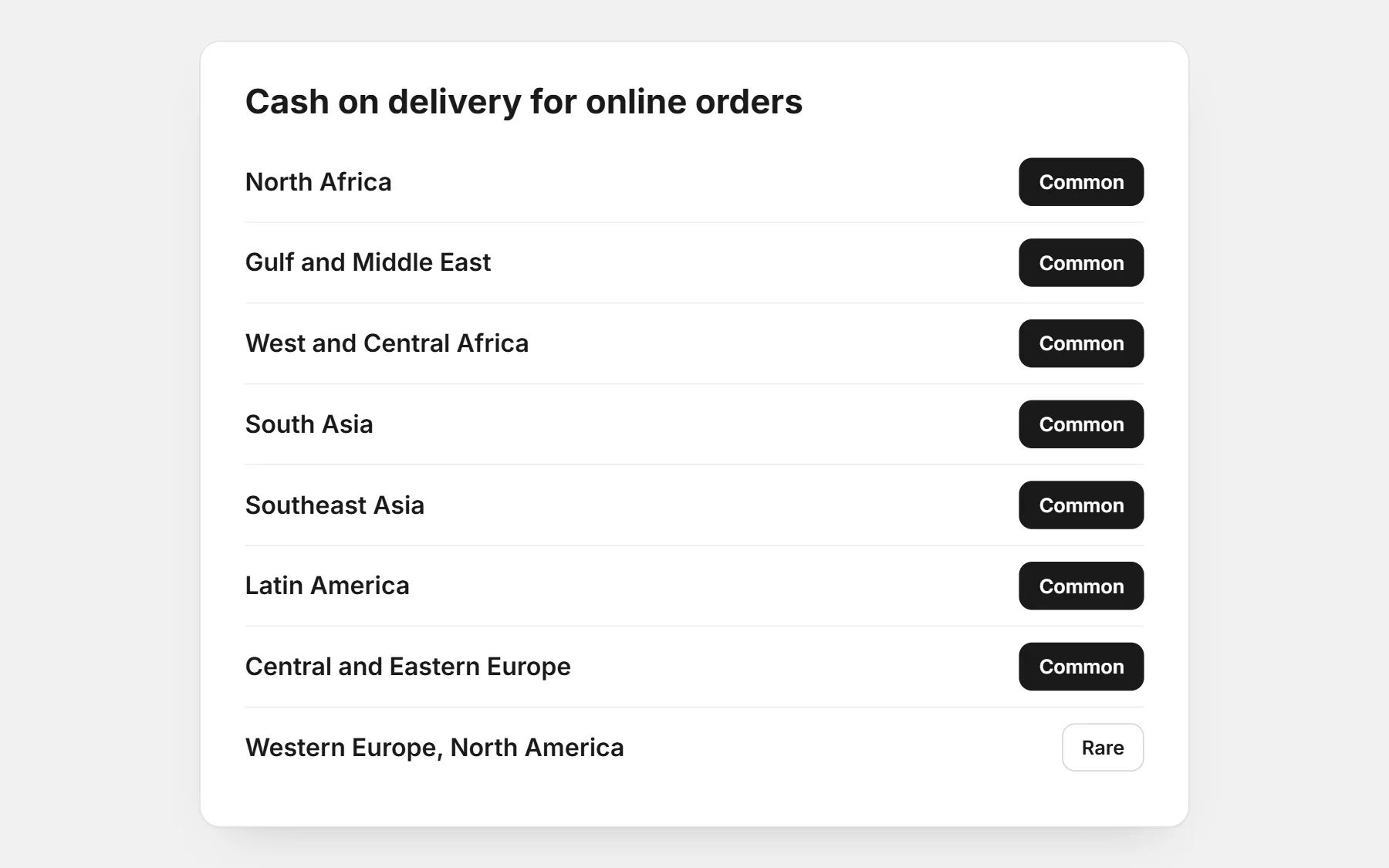
With cash on delivery, 100 orders received do not mean 100 sales. Some never confirm, and some confirmed parcels are refused at the door. Your ad cost is paid on all 100; your revenue comes only from the delivered ones.
| Step | Example |
|---|---|
| Orders received | 100 |
| Confirmed (80%) | 80 |
| Delivered (75% of confirmed) | 60 |
| Refused and returned | 20 |
So the ad cost of one delivered order is not your cost per order but almost double: 100 ÷ 60 = 1.7 times.
A worked example
Selling price 249 (delivery included), product 80, packaging 5, delivery 35, return 15, ads 25 per order received, with the funnel above.
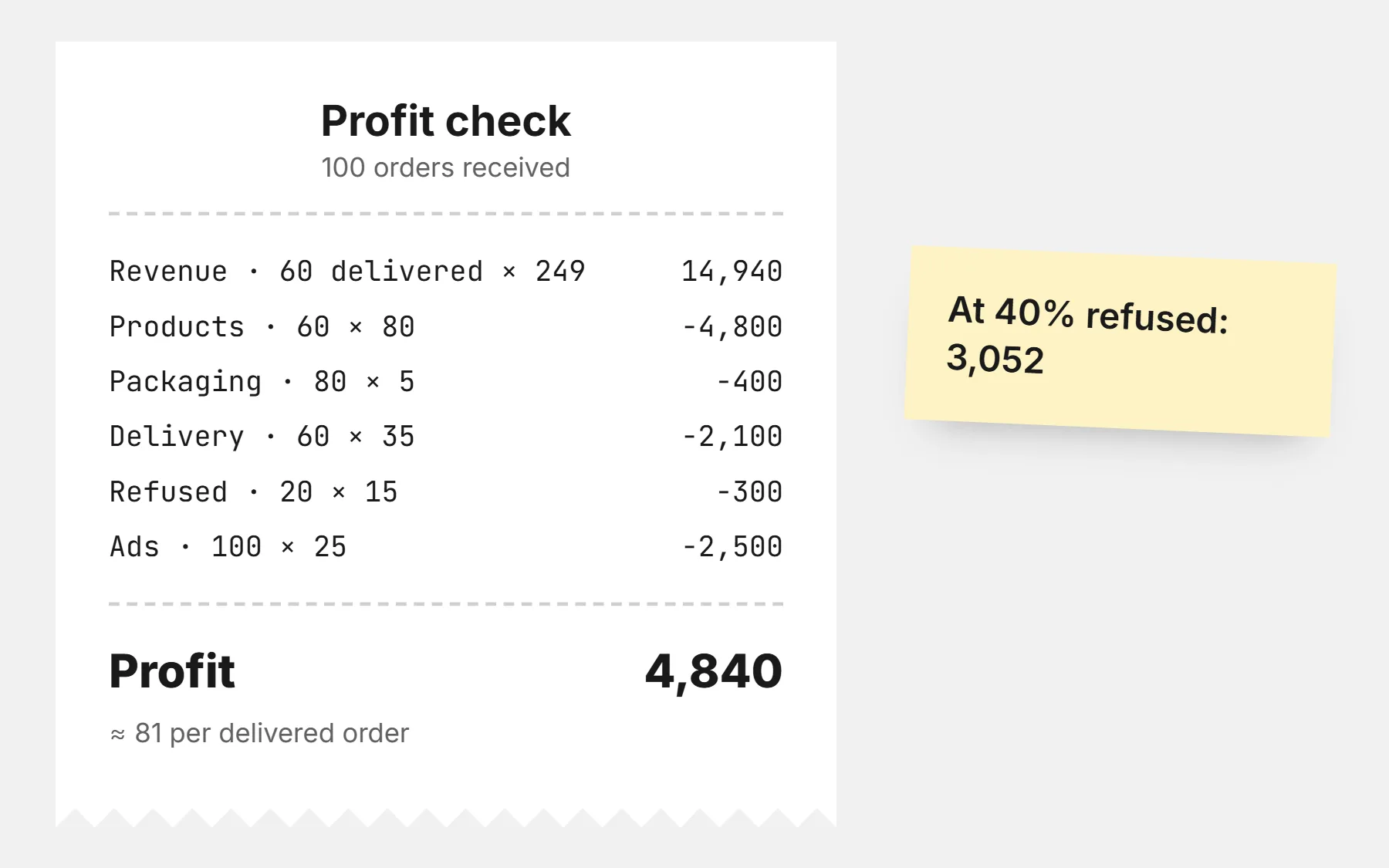
| For 100 orders received | Amount |
|---|---|
| Revenue: 60 delivered × 249 | 14,940 |
| Products: 60 × 80 | − 4,800 |
| Packaging: 80 shipped × 5 | − 400 |
| Delivery: 60 × 35 | − 2,100 |
| Returns: 20 × 15 | − 300 |
| Ads: 100 × 25 | − 2,500 |
| Profit | 4,840 — about 81 per delivered order |
Now raise the refusal rate to 40% of confirmed orders: only 48 are delivered, and the profit falls to about 3,050 — more than a third less, for the same work.
Try your own numbers in the profit calculator; it does this sum for you and shows the most you can pay in ads per order before you lose money.
Setting the price
- Start from the customer: what do similar products sell for, and what makes yours worth a bit more (photos, faster delivery, a guarantee)?
- Then check the floor: the price must leave a profit with your real refusal rate and a realistic ad cost.
- Prefer round, clear prices that include delivery when you can: 249 delivered reads better than 219 + 30.
- Raise the basket, not only the price: “2 for 399” or a small add-on often adds more profit than a higher price.
Profit calculator
Your real profit per order after delivery, refused parcels and ads — and the most you can pay per order.
Questions people ask first
What margin should an online store aim for?
After product, delivery, returns and ads, many small COD stores aim to keep at least 20–30% of the selling price as profit. Below that, one bad week of refusals or ad prices wipes it out.
Should I include delivery in the price?
Often yes: one clear price converts better. If your delivery costs differ a lot by city, keep a small fee instead and show it early.
How do I know my real refusal rate?
Count refused parcels ÷ shipped parcels over the last month, for each product. Use that number, not the one you hope for.