




Where cash on delivery is common, by region
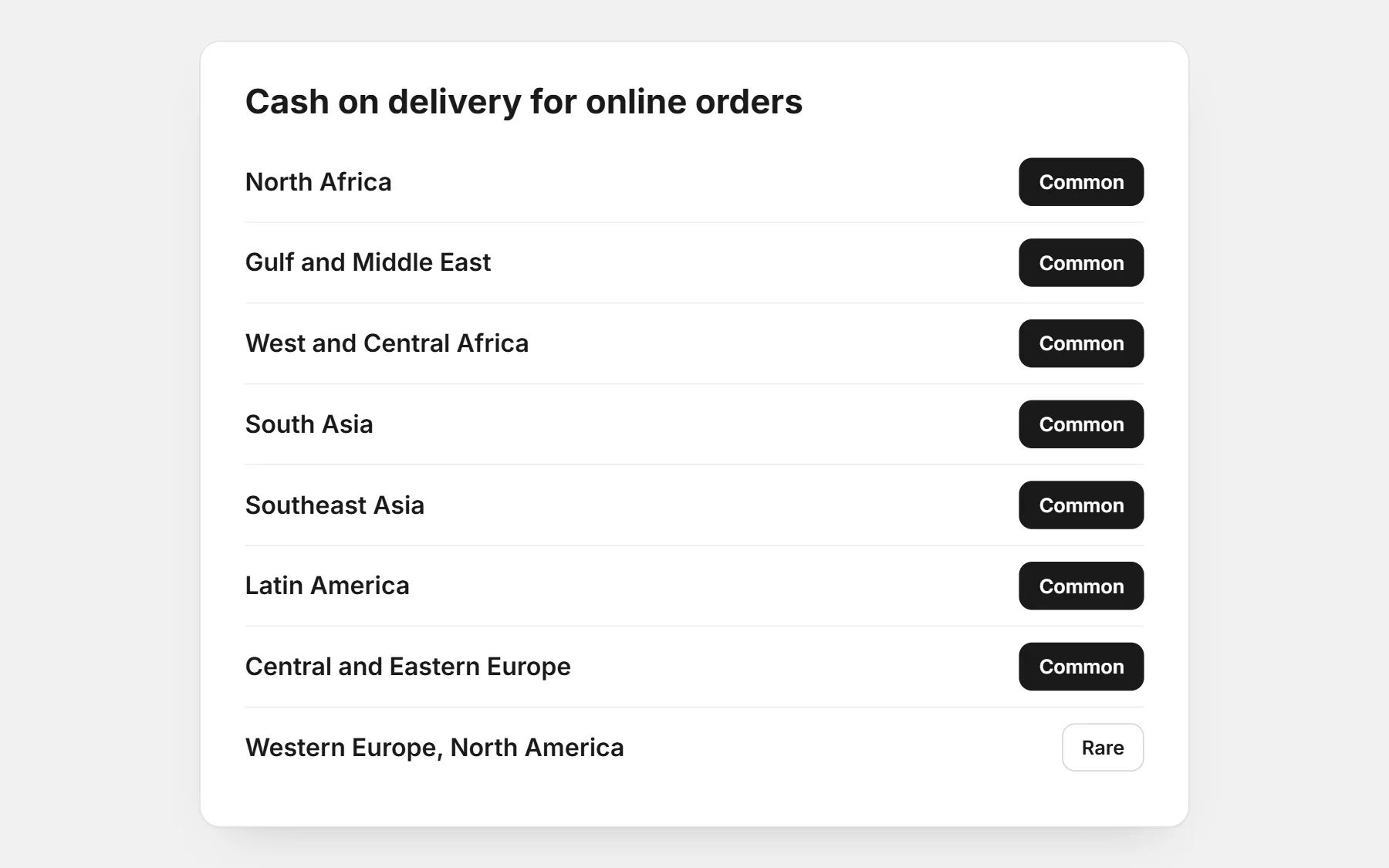
| Region | Countries where COD is common | What to know |
|---|---|---|
| North Africa | Morocco, Algeria, Tunisia, Libya, Egypt, Mauritania | COD is the usual way to pay a new store; confirm orders by phone or WhatsApp |
| Gulf and Middle East | Saudi Arabia, UAE, Kuwait, Qatar, Oman, Bahrain, Jordan, Iraq | Cards and wallets grow fast, but many buyers still choose COD for a first order |
| West and Central Africa | Senegal, Côte d’Ivoire, Cameroon, Gabon, Congo, Mali, Benin, Togo, Nigeria, Ghana | COD next to mobile money; shared XOF and XAF currencies |
| South Asia | Pakistan, India, Bangladesh | COD is widespread outside the big cities; refusal rates matter |
| Southeast Asia | Indonesia, Philippines, Vietnam, Thailand, Malaysia | Marketplaces and wallets push prepaid, but COD stays popular |
| Latin America | Mexico, Colombia, Peru, Guatemala and Central America | COD sits next to cash-at-store payments and transfers |
| Central and Eastern Europe | Romania, Bulgaria, Greece, Poland, Czechia, Slovakia, Hungary | Often offered with a small extra fee by the courier or post |
In Western Europe, North America, Australia and East Asia, cash on delivery is rare for online orders. There, cards, wallets and pay-later dominate.
Why some countries keep paying cash
- Many people are paid in cash or have no card used online.
- New online stores are strangers: paying at the door removes the risk.
- Buyers want to see the product before paying.
- Orders start on social media and WhatsApp, where a short form beats a card checkout.
What changes when you sell with cash on delivery
- Confirm every order by call or message before shipping. It is the cheapest way to keep refusals low — see the confirmation call script.
- Show the full price and delivery fee before the order form. A surprise at the door is the first reason for a refusal.
- Keep the form short: name, phone, city, address.
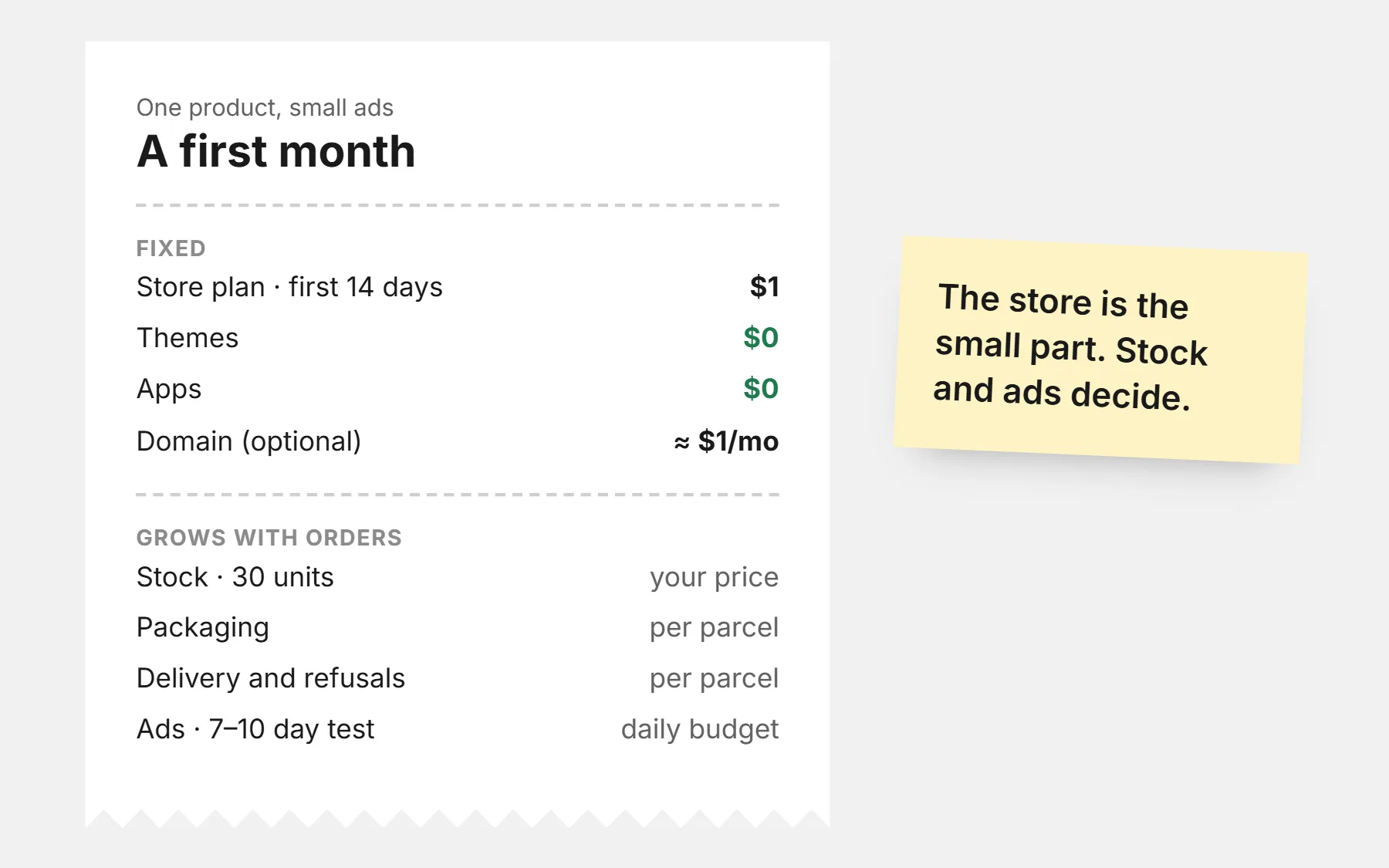
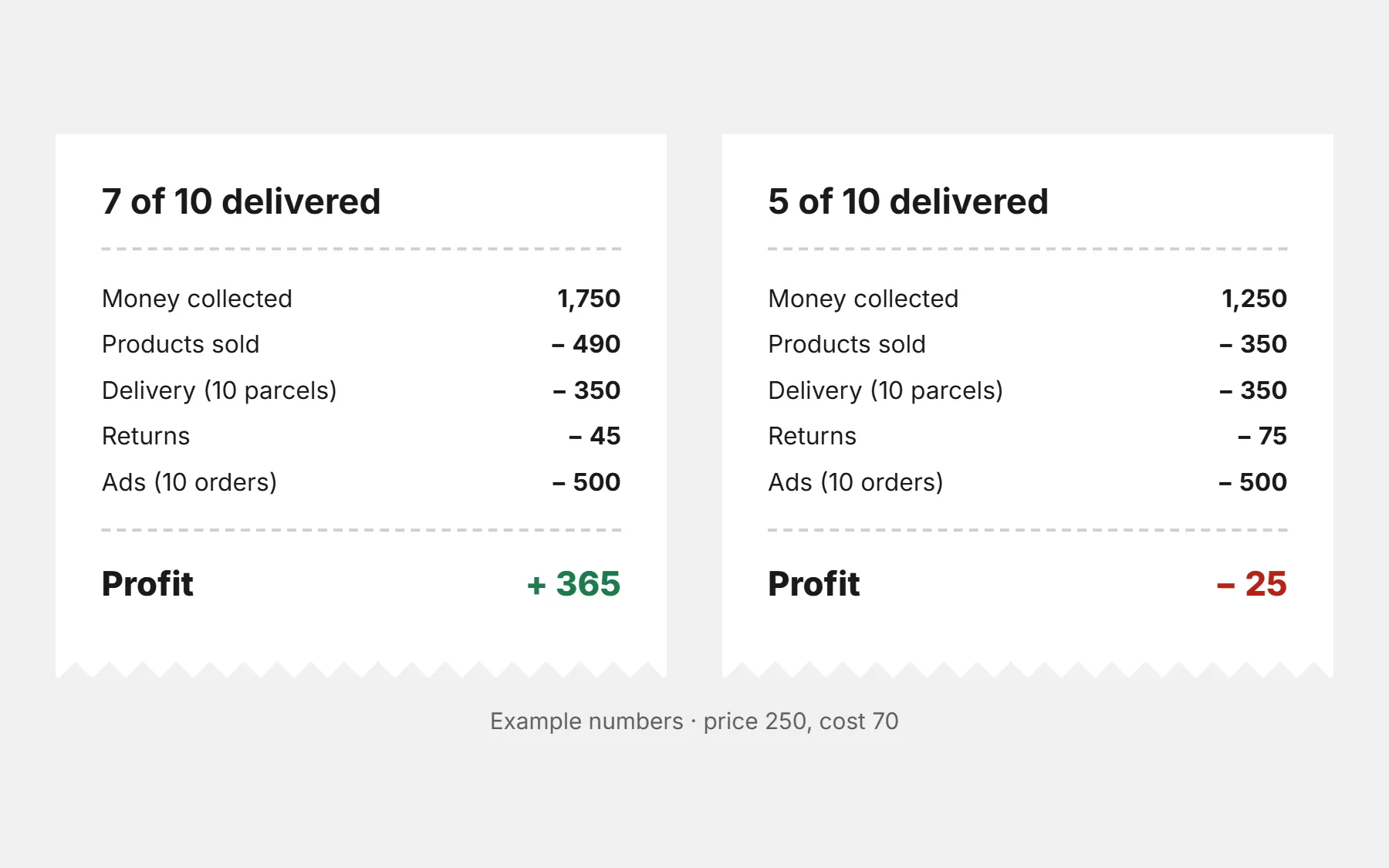
- Count refusals in your prices: a refused parcel still costs delivery. Use the profit calculator.
- Know when your money arrives: couriers collect the cash and pay you back on a schedule.
The full setup: running an online store with cash on delivery and reducing refused parcels.
Selling in these countries with CODOS Store
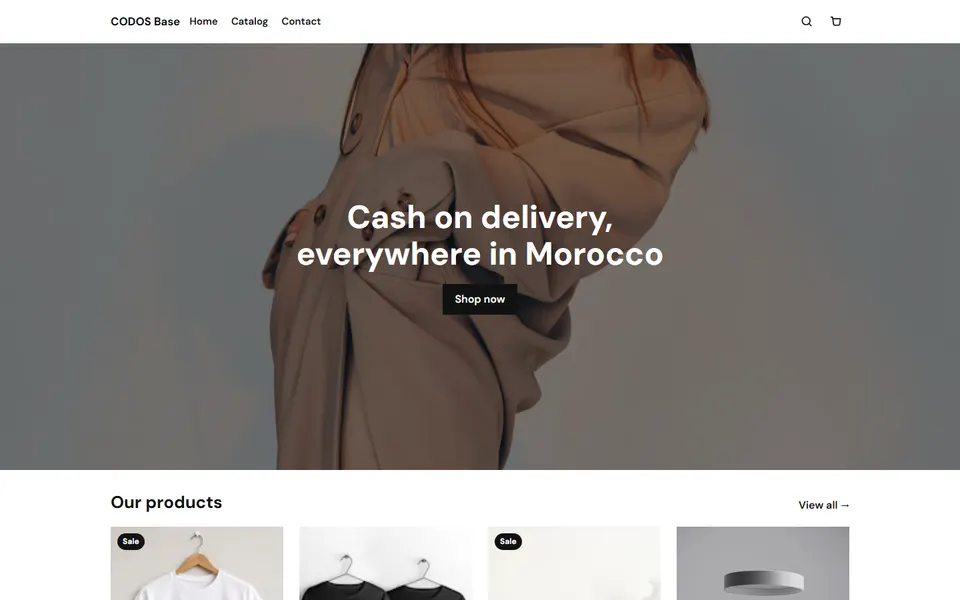
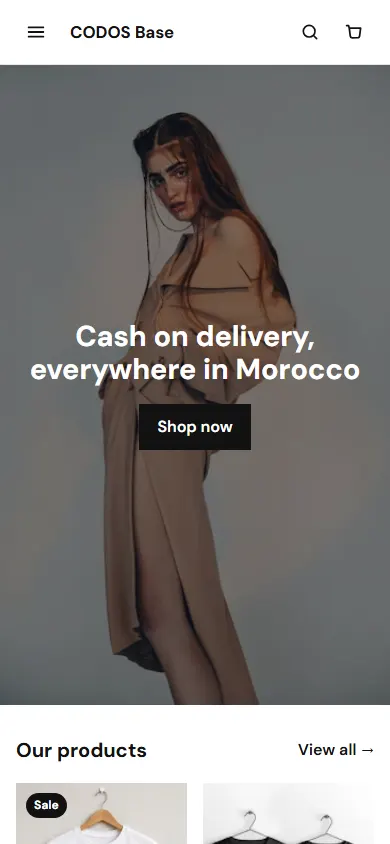
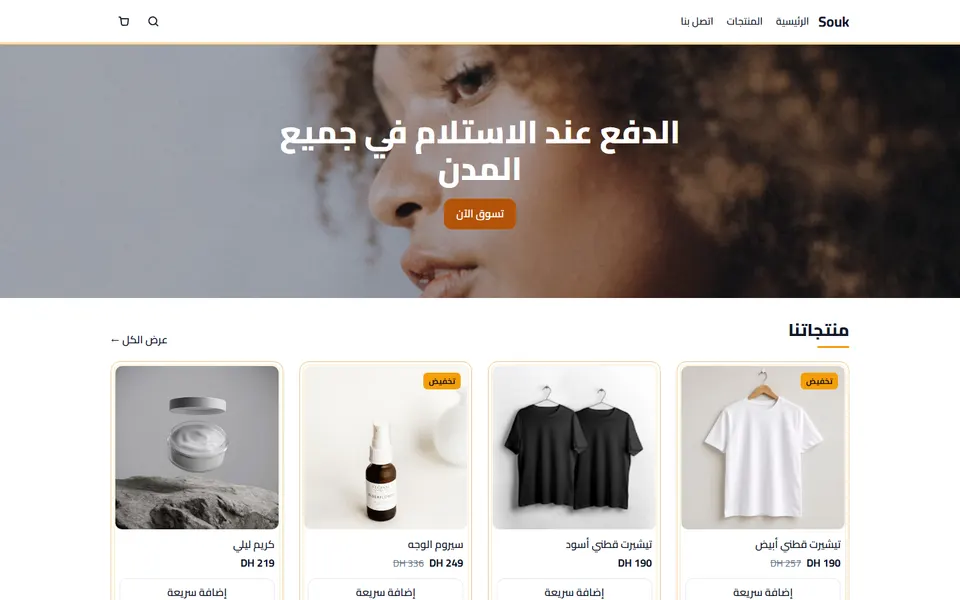
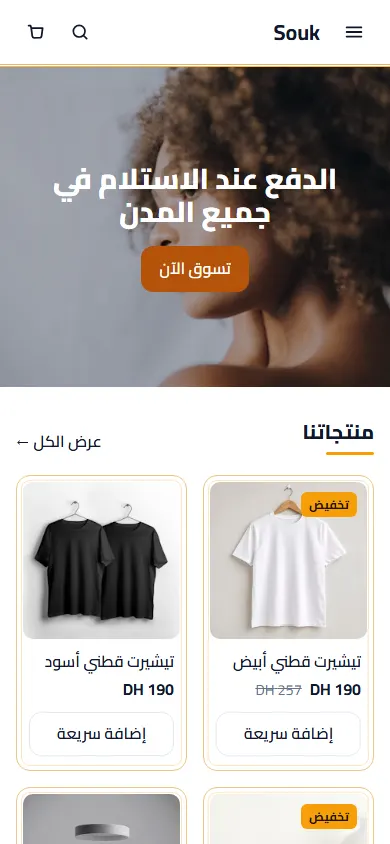
CODOS Store is an online store builder with cash on delivery and bank transfer as payment options, side by side. You choose your store’s country and currency, set delivery fees per city, and add other countries as markets with their own currency and fees.
Countries from this list you can choose as a store country today: Morocco, Algeria, Tunisia, Libya, Egypt, Mauritania; Saudi Arabia, UAE, Kuwait, Qatar, Oman, Bahrain, Jordan, Iraq; Senegal, Côte d’Ivoire, Cameroon, Gabon, Congo, Mali, Benin, Togo, Nigeria, Ghana; Pakistan, India, Indonesia, Malaysia; Mexico; Greece.
Country guides: sell online by country, selling in Africa, and cash on delivery in Mexico.
Questions people ask first
Which country uses cash on delivery the most?
No reliable public ranking exists for 2026 — published figures disagree. COD is clearly common across North Africa, the Gulf, West and Central Africa, South and Southeast Asia, parts of Latin America and Eastern Europe.
Is cash on delivery available in Europe?
Yes, mainly in Central and Eastern Europe and Greece, often with a small extra fee. In Western Europe it is rare.
Is cash on delivery available in the USA?
Rarely for online stores. Cards, wallets and pay-later options are the norm.
Is cash on delivery risky for the seller?
The risk is refused parcels. Sellers keep it low by confirming orders, showing the full price early and delivering fast.