




Why buyers still pay at the door
- Trust: a new store on Instagram or TikTok is a stranger. Paying on delivery removes the risk of paying and receiving nothing.
- Cash habits: many buyers are paid in cash, have no card, or do not use it online.
- Seeing before paying: buyers want to check the size, the colour and the quality first.
- Social commerce: people find products in ads and videos, then order with a short form or a message — not with a long card checkout.
Mobile money is growing fast in East, West and Central Africa, and card payments grow in the big cities. But for a first order from a shop the buyer does not know yet, paying on delivery often remains the easiest yes.
Where the opportunity really is
- Products people cannot easily find locally, at a fair price: practical home items, beauty and care, fashion in the right sizes, accessories, kids’ items.
- Local brands: a product made or packed locally, with a name, real photos and a WhatsApp number, earns trust faster than a copy of a viral ad.
- Neighbouring countries once delivery works at home: a second market with its own currency and fees.
- Repeat buyers: the first order costs ads; the second one costs a message. Stores that keep customers win.
Where the money is lost
| Cost | Why it hurts | How to control it |
|---|---|---|
| Refused parcels | You pay delivery out and often back, for no sale | Confirm every order by call or message; show the full price and fee before the form |
| Fake or joke orders | Wasted calls and shipping | Short confirmation, a real phone number check, no shipping without a yes |
| Cash held by the courier | Your money arrives days or weeks later | Ask how often they pay; start with a small stock |
| Ads | Rising cost per order | One product, a clear page, decide your maximum cost per delivered order |
| Stock | Money stuck in products that do not sell | Test small quantities first |
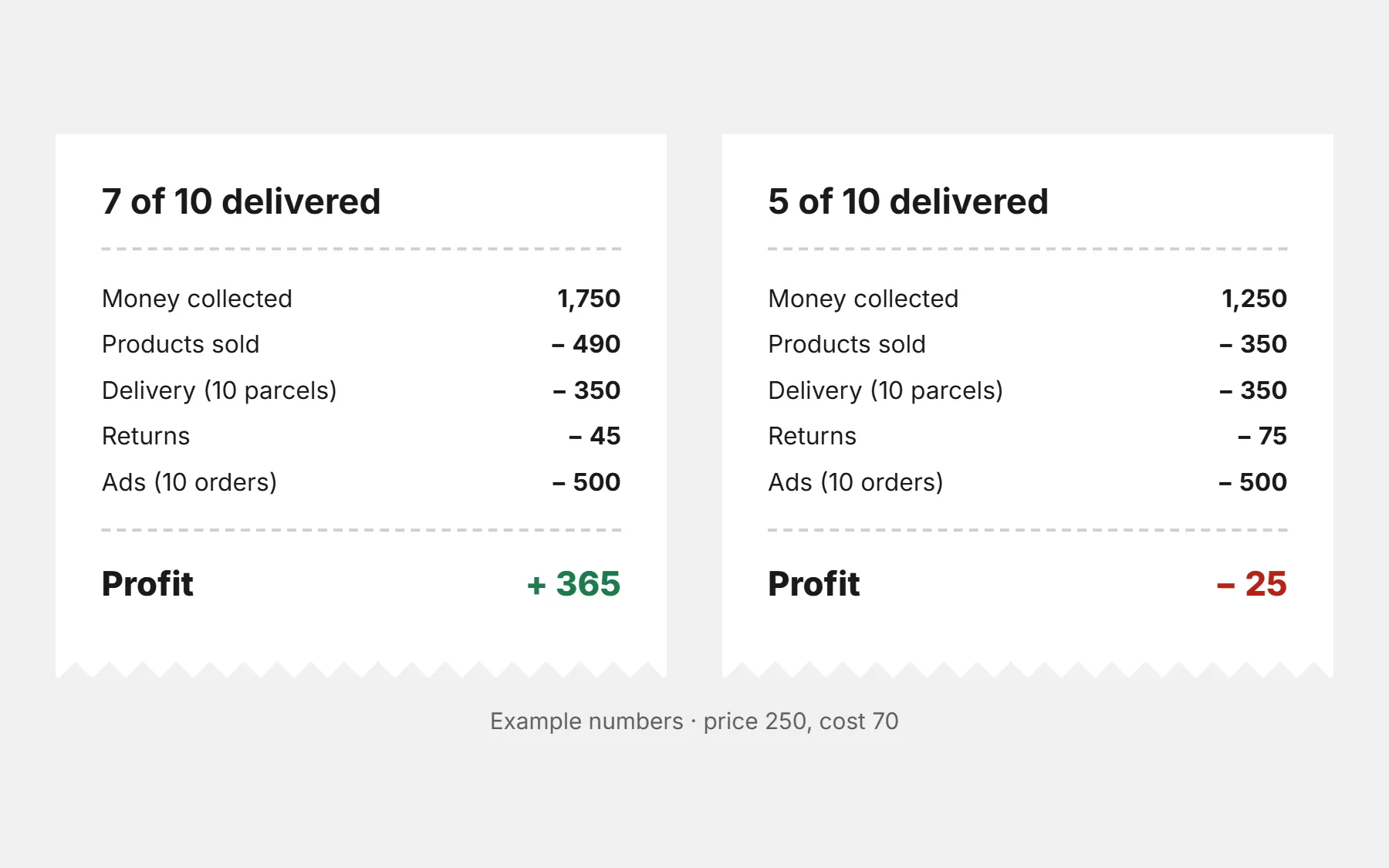
A worked example: the delivery rate decides
Example numbers, in any currency: price 250, product cost 70, delivery 35 per parcel, 15 extra for a parcel that comes back, and 50 of ads per order received. You ship 10 confirmed orders.
| 7 delivered, 3 refused | 5 delivered, 5 refused | |
|---|---|---|
| Money collected | 1,750 | 1,250 |
| Products sold | − 490 | − 350 |
| Delivery (10 parcels) | − 350 | − 350 |
| Returns | − 45 | − 75 |
| Ads (10 orders) | − 500 | − 500 |
| Profit | + 365 | − 25 |
Same product, same ads: the difference between profit and loss is how many parcels are delivered. That is why confirmation and clear pages matter more than finding a “better” product. Put your own numbers in the profit calculator.
Where sellers use cash on delivery today
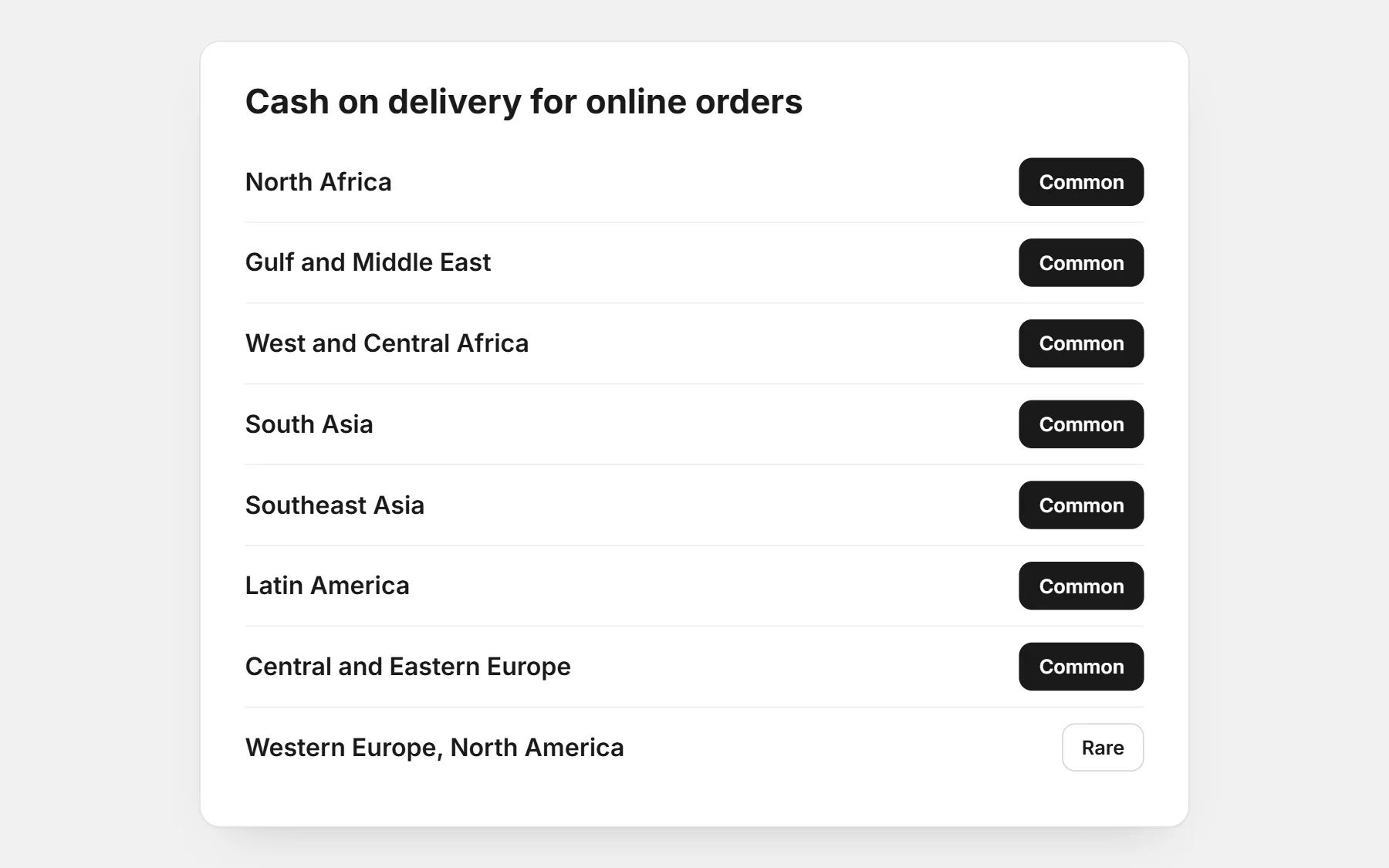
Cash on delivery is common for online orders in North Africa (Morocco, Algeria, Tunisia, Libya, Egypt), in the franc zones of West and Central Africa (Senegal, Côte d’Ivoire, Cameroon, Gabon and their neighbours), and in many cities of Nigeria and Ghana. In Kenya, mobile money is the habit; in South Africa, cards are more common. Habits change fast, so ask your own buyers.
Country by country: sell online in Africa, and the wider list of cash on delivery countries.
How to test the opportunity in 30 days
- Week 1: choose one product, buy a small stock, build one clear product page with real photos.
- Week 2: sell to people you know and on social media; confirm every order; note every refusal and its reason.
- Week 3: a small ad test on the same page, with your pixel installed.
- Week 4: count delivered orders, profit per delivered order and the cash actually received. Continue, change the product, or stop.
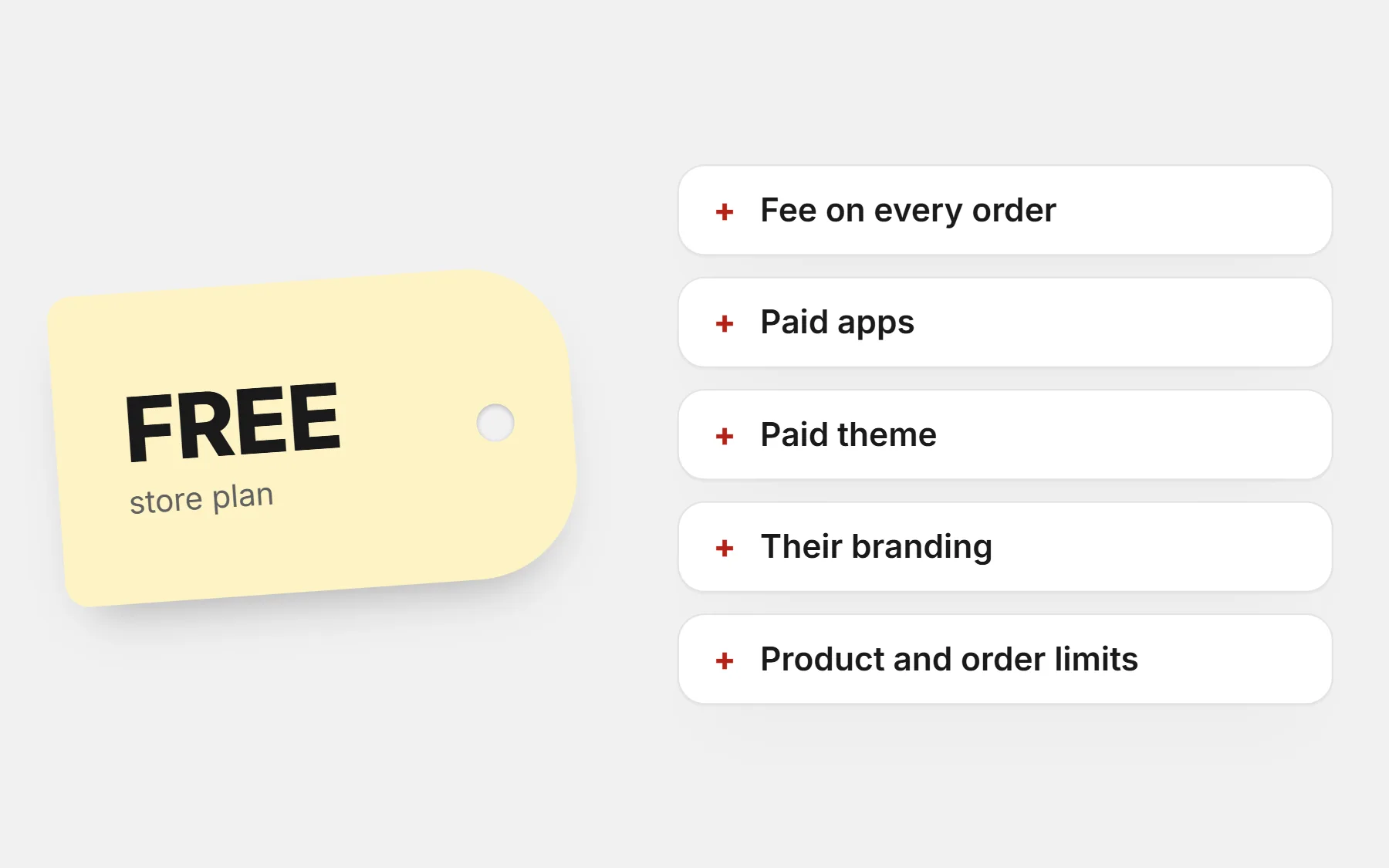
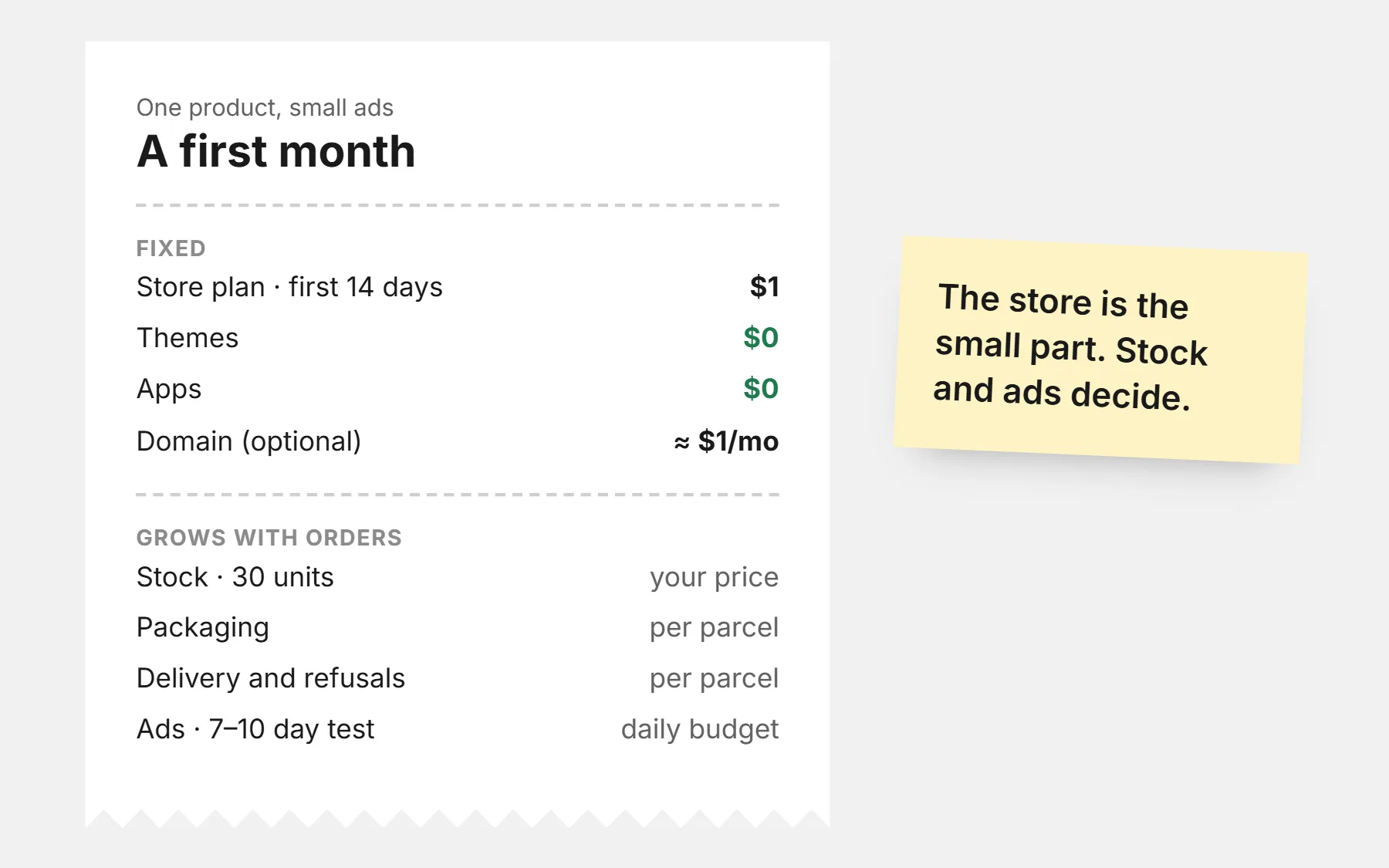
On CODOS Store you can build privately for three days free, then pay $1 for the first 14 days — enough to run this test without a big commitment. See how to get your first order.
Profit calculator
Your real profit per order after delivery, refused parcels and ads — and the most you can pay per order.
Questions people ask first
Is cash on delivery profitable in Africa?
It can be, when most confirmed orders are delivered and your price leaves room for delivery, returns and ads. The same product can make or lose money depending on the delivery rate.
Which African country is best for cash on delivery?
The one where you can deliver fast and talk to buyers in their language — usually your own country and your own city first.
Will mobile money replace cash on delivery?
It is growing, especially in East, West and Central Africa. For first orders from unknown stores, many buyers still prefer to pay at the door. Offer what your buyers ask for.
How do I reduce refused parcels?
Confirm every order, show the full price and delivery fee before the form, and ship fast. See reduce refused COD orders.