





Why customers refuse parcels
- They ordered on impulse and changed their mind.
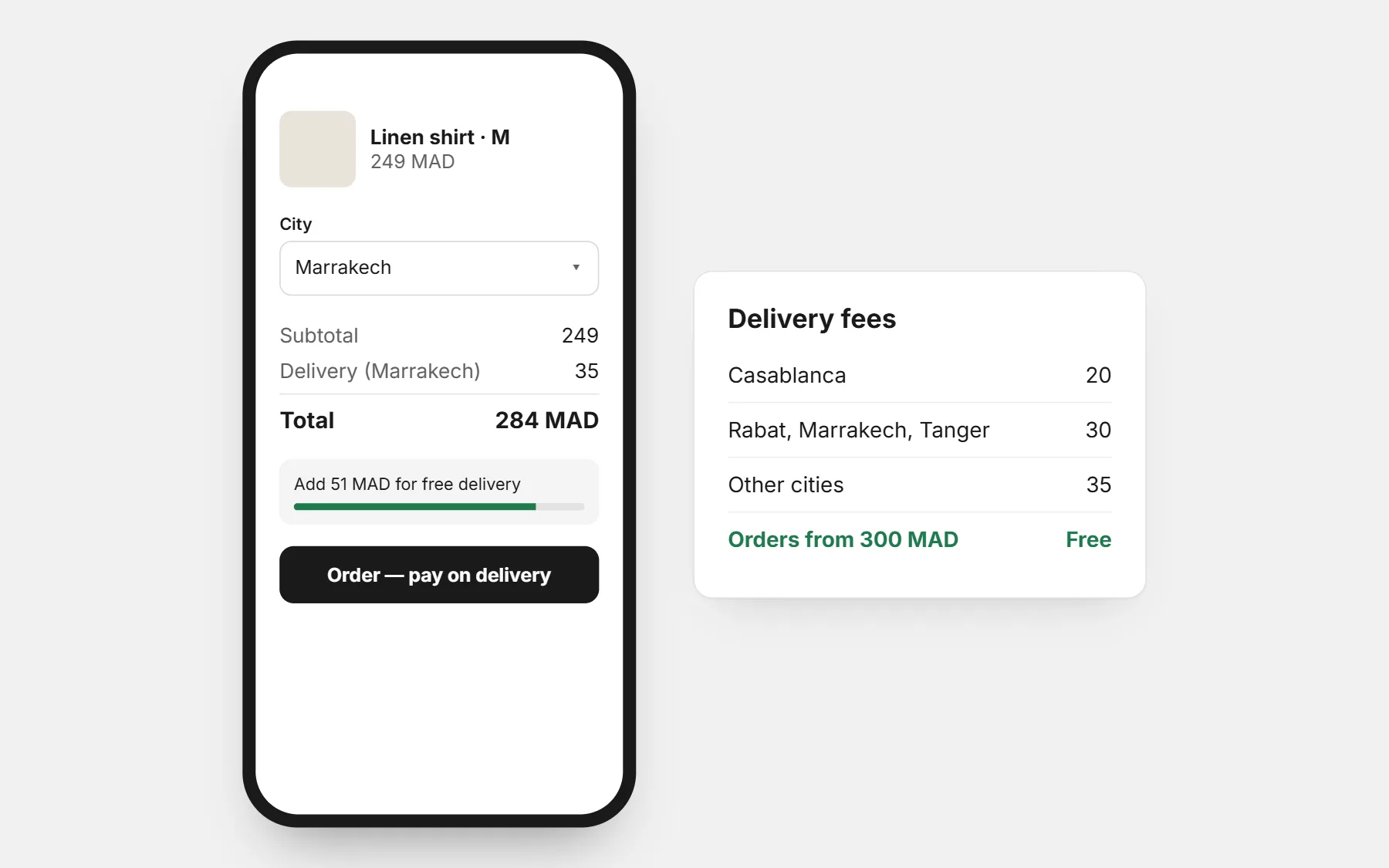
- They did not understand the total price (delivery fee added, price per piece misread).
- The delivery took too long, so they bought elsewhere.
- They were not reachable: wrong number, phone off, wrong address.
- It was not them: a fake order, a prank, a competitor.
- The product did not match the photo or the size was wrong.
Measure your rate before fixing anything: refused parcels ÷ shipped parcels, per product and per city. A product with twice the average refusal rate is often a product page problem, not a customer problem.
Before the order: set honest expectations
- 1. Show the total. Price, delivery fee and delivery time next to the order button — no surprise at the door.
- 2. Real photos and sizes. Your own photos, a size chart, the material. Most “it is not what I saw” refusals start on the product page.
- 3. Ask only what you need. Name, phone, city, address. Every extra field loses honest buyers, not fake ones.
- 4. Check the phone number format in the form, so a missing digit is caught while the customer is still there.
- 5. Offer bank transfer next to cash on delivery, with a small advantage (free delivery or a small gift) for paying ahead. Prepaid orders are never refused.
Before shipping: confirm every order
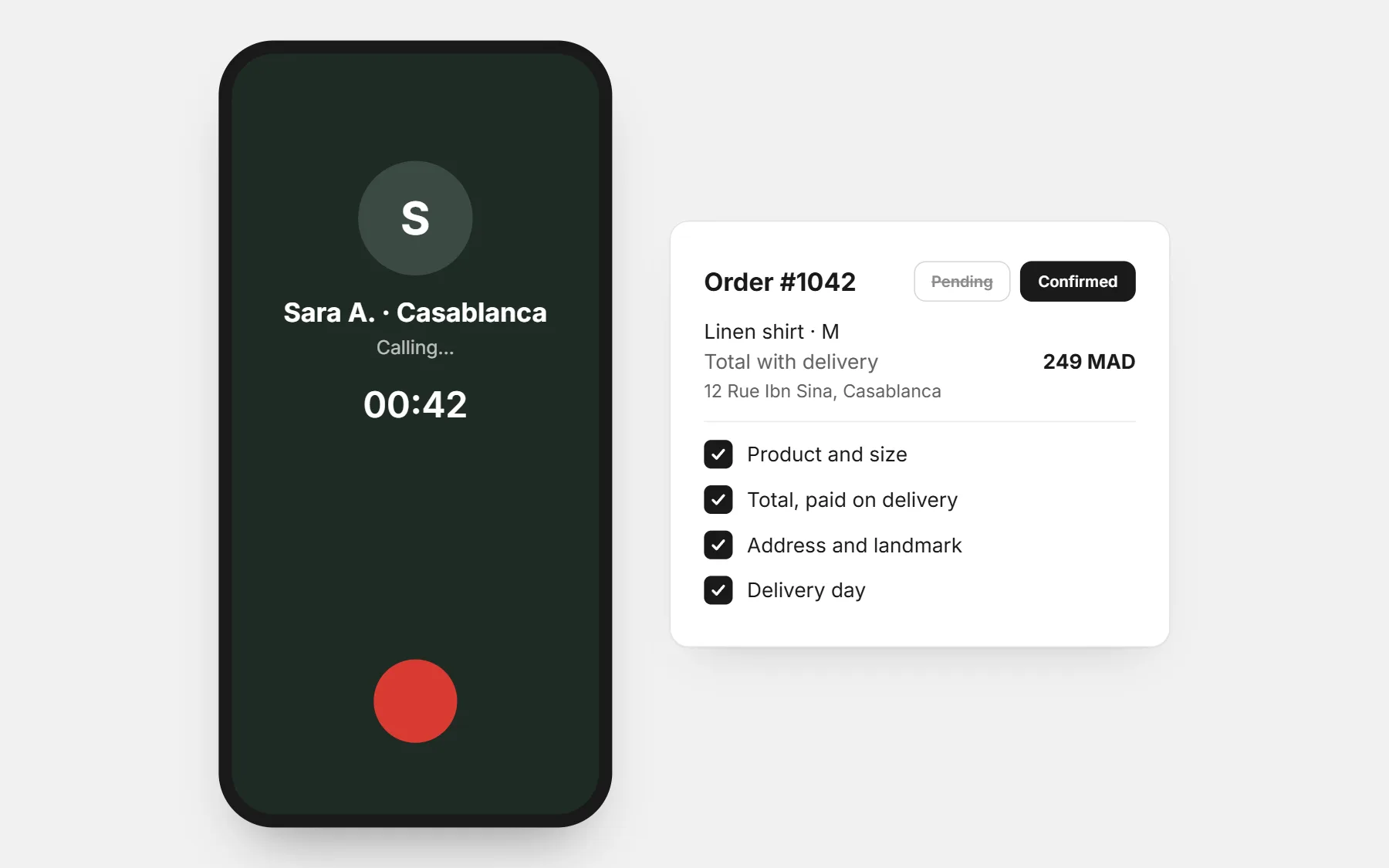
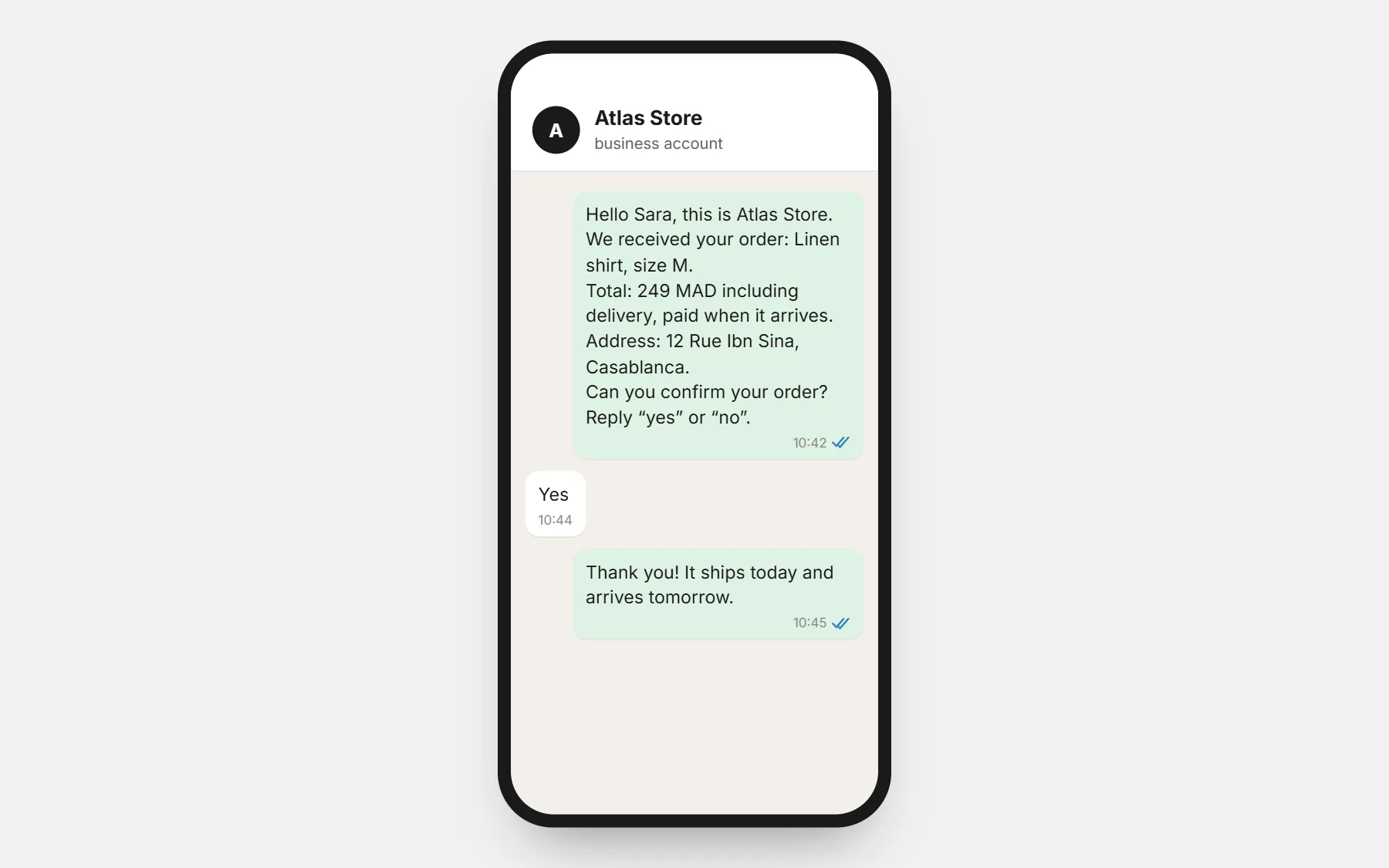
- 6. Confirm within the hour. A call or WhatsApp message while the customer still remembers ordering. The longer you wait, the more “I don’t remember” you hear. Copy our confirmation messages.
- 7. Repeat the total and the delivery day in the confirmation. A customer who said “yes” to a precise amount rarely refuses it.
- 8. Flag repeat refusers. Keep a list of numbers that refused before and ask them to pay the delivery fee in advance.
- 9. Do not ship unconfirmed orders. Two attempts, then cancel. An unconfirmed parcel is a likely return.
On the way and at the door
- 10. Ship fast. Same day or next day. Every extra day lowers the chance the customer still wants the product.
- 11. Message on the delivery day: “Your parcel arrives today, the courier will call you.” Fewer missed calls, fewer “not reachable”.
- 12. Pack it well and include a small card with your number. A parcel that looks cared for is easier to accept.
What a refusal really costs
Say you sell at 249, the product costs 80, delivery costs 35, and your courier charges 50 for a refused parcel (the trip there and back). Each delivered order leaves you 134. Each refused one costs you 50 — and the money is out while the stock travels back. At a 30% refusal rate, you need many more orders for the same profit than at 15%.
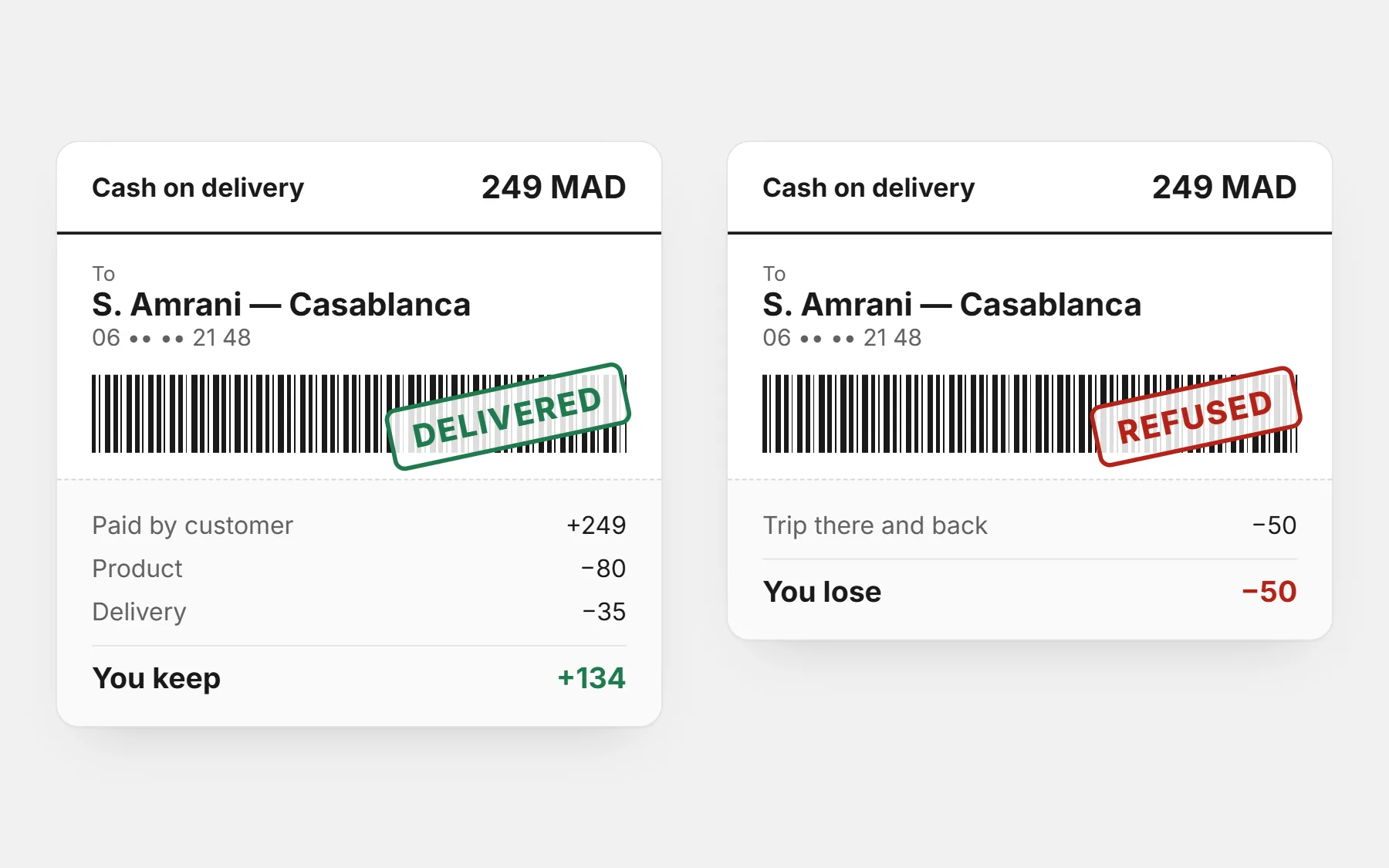
Put your own numbers into the profit calculator: it shows your profit per 100 orders and the refusal rate at which you stop earning.
Profit calculator
Your real profit per order after delivery, refused parcels and ads — and the most you can pay per order.
Questions people ask first
What is a normal refusal rate for cash on delivery?
It depends a lot on the product, the price and the country. Many sellers aim to keep it under 20% of shipped parcels; compare your products against each other rather than against a single number.
Should I ask for a deposit?
For first-time buyers it usually costs you more orders than it saves. Ask for the delivery fee in advance only from numbers that refused before, or for expensive and custom-made items.
Do fake orders come from bots?
Some do; most come from people. A short form, a phone format check and a confirmation call stop most of them before they cost you a delivery.